

Thank You For Reading
Learning how to write from the heart

How are you?
I had been thinking about what to write for the last two weeks. Last week, it was easy to publish the photographs I took at the protest because it was observational. It did not ask me to sit with, and extract, whatever I was feeling at the time.
But writing to you is different.
I’ve noticed that when I write here, I’m able to work through a lot! And I find that fascinating because writing has never come easily to me at all. In fact, it’s something I’ve struggled with all my life.
As a science student in secondary school1 (a school whose entrance exam I intentionally wrote to fail, so still not sure how I got in), we rarely (never) read books or wrote many essays. Sure, I may have written one explaining the metaphor “all that glitters is not gold” during a major exam, but most of our time was spent reading textbooks and solving equations that looked like foreign languages to me. The only class I ever truly enjoyed and easily got an A in was Geography. I graduated mostly by cramming everything else.
I enjoy learning about the who-what-when-where-and why of things. So when it came time for University, I promised myself I would make the most out of it by finding something I’d love to study for five years.
My research led me to double major in Sociology and Communications (BA).
In sociology, I got to scientifically analyze how social structures, like families, organizations, and governments, shape individual lives and, conversely, how human actions create societal change.
And in Communications, I studied how information, ideas, and meaning are created, shared, interpreted, and influenced between people or groups.
How fitting! If I do say so myself.
Even though I wasn’t as confident in my choices then as I am now, my majors contained many of the elements I still hold as values today: my curiosity about the world and how systems work, storytelling as a tool to understand society, people watching (observation & analysis), social change, community, bridge building through communications, and agency.
The only problem was that my dad, at the time, still felt he was in charge of my educational choices, so he sent me to University in Canada to study Nursing. And I chose to study two majors that I had no educational background in, without telling him until I had finished my first year and had to send in my report card.
As fate would have it, I loved every minute of learning in university—except for when it came to writing. My professors would consistently tell me how I have such great ideas, but I just didn’t have the words for them.
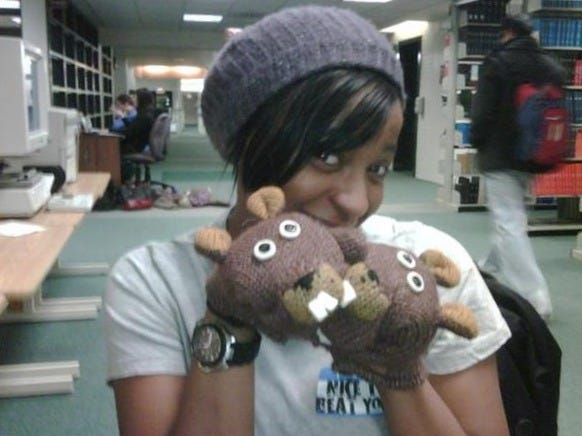
I was determined to learn, though. I cried in many of their offices and spent many hours with teaching assistants (TAs) tutoring me. But not having that strong English or Humanities background was doing a number on my grades, and by my second year of not producing all A’s, barely any B’s, and almost failing both programmes, the heat was on in my Nigerian home.
My dad and I were beefing so badly that he was preparing to send me back to Nigeria for wasting his money. I, too, was making plans to tell the Canadian government my father had abandoned me—I was not going back to Warri2 without a fight.
My mother thankfully convinced him otherwise, and I learned to live with the dread that writing brought up by getting my reps in. And by my final year, I had finally figured out my systems and started pulling A’s like it was nothing.
The new problem was that I had figured out systems to write in a way that appeased my professors (even in my master’s program), but I never really figured out how to just… write. The game is different when the writing doesn’t require 15 MLA-APA-Chicago citation styles.
Theeeeeen, I graduated. And the focus shifted once more to writing professionally as a media and communications specialist. Suddenly, my writing was filled with corporate jargon and higher stakes.
Back in uni, the only people reviewing my writing were my professors and their TAs. Who approved me to lead end-to-end media campaigns for the largest life science announcement in Canadian history, which resulted in 1 billion impressions on social media, 700 pieces of coverage, and 75+ minutes of live media coverage on major Canadian networks?
After twelve years of stuff like that, did I become confident enough to call myself an expert at corporate writing? Yes.
But it still isn’t just… writing. I just wanted to write from the heart. For me.
I started my Reading Club over five years ago because of this desire. Around that time, I had started speaking more openly about how much I wished I could write, and I kept hearing the same advice: read more, it improves your writing. And that was that.
In fact, one of the major reasons I dated my first husband was because I thought he was a good writer. I assumed that somehow being around a writer would inspire me to write more. I guess there’s more than one way to skin a cat. As my friend Motley once said to me, “ein teach you abi he no teach?”, because some of my best writing has come from processing the breakdown of that relationship.
Before I painfully take you through my whole backstory of writing up until this moment, I say all this to say that—writing to you for roughly the past year, has been the longest I’ve ever consistently written from the heart. And I must tell you, it has been uncomfortable, overwhelming, but also delightful.
I could have the words and the ideas, and still struggle to write. But I like how I can’t force it. I like how much easier it comes when I strip away my excuses, eliminate distractions, and let go of every version of what I think I should be saying. Writing to you insists that I sit with myself, and pay close attention to what’s actually coming up, not what I planned to write, but what’s here with me right now.
Take this post, for instance. If you had asked me what I was writing about before I started this, I wouldn’t have been able to answer. I just started free writing3 and ended up here. Getting the rep in matters more than getting it perfect. I learned about that from one of my favourite newsletters, The Imperfectionist by Oliver Burkeman (highly recommend).
There is a discomfort of not sending out a letter that I am proud of, like Camp To Restore Spirit, but I’m even prouder of the fact that I showed up with a story nonetheless, and stuck to my deadline of pushing a post out on Sunday morning.
By the way, thank you for reading. A good chunk of how I hold myself accountable to a consistent writing practice is by telling myself that someone is looking forward to it.
Yours Imperfectly,
Osẹ̀
For more updates, follow me on Instagram | YouTube | Spotify | Substack
Secondary school is what Nigeria called High School at the time.
Warri, in Nigeria’s Delta State, has a long history of inter-ethnic conflict, militancy, and political violence, particularly through the 1990s and early 2000s, which shaped the environment many of us grew up in.
Freewriting is a writing practice where you write continuously for a set amount of time without stopping to edit, correct, or judge what's coming out. No backspacing, no second-guessing — just words on the page as they arrive. The goal isn't a good first draft. It's to get out of your own way long enough to find out what you actually think.
You stay showing up 🩷
Thank you for writing and sharing so beautifully